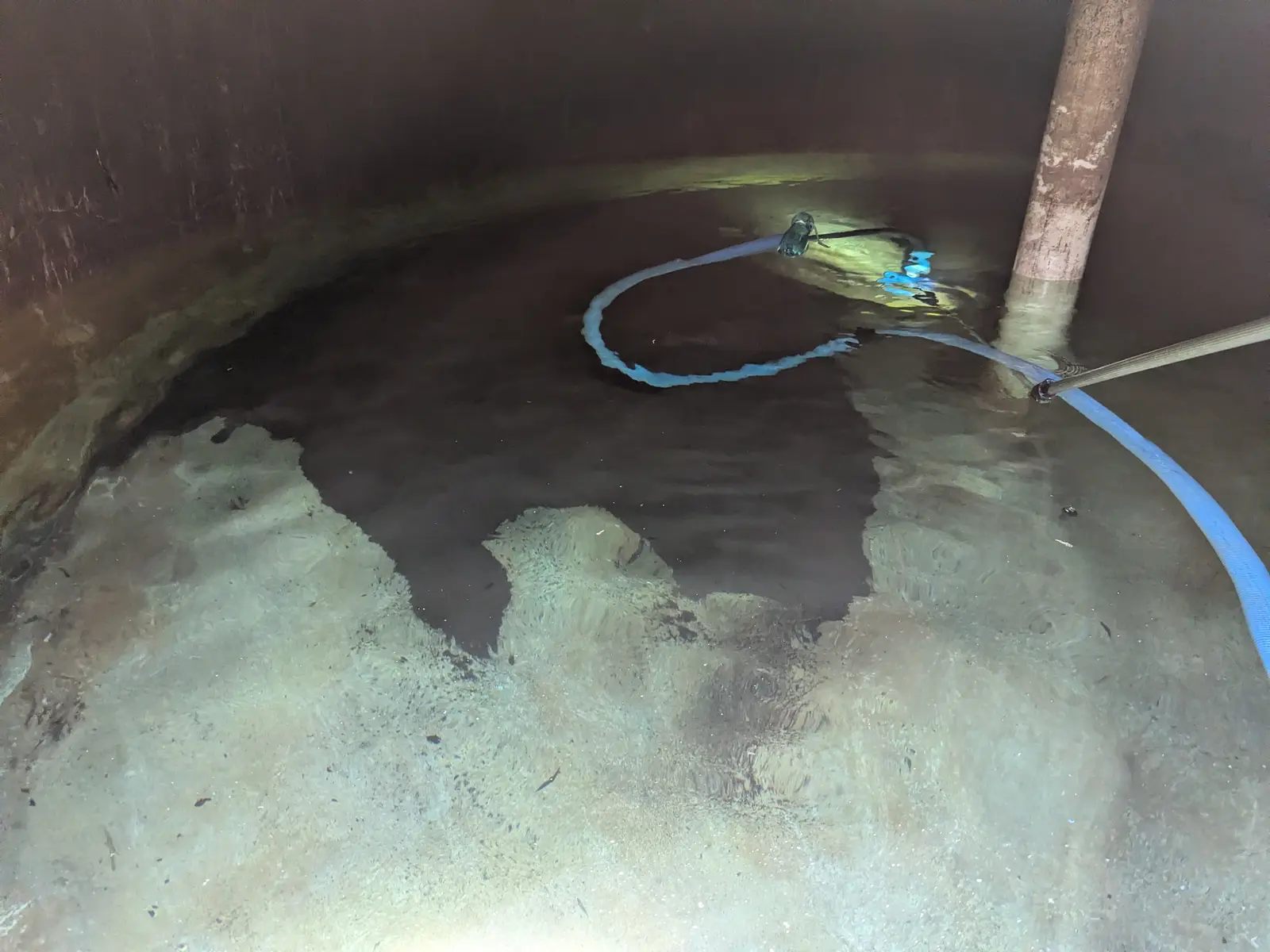
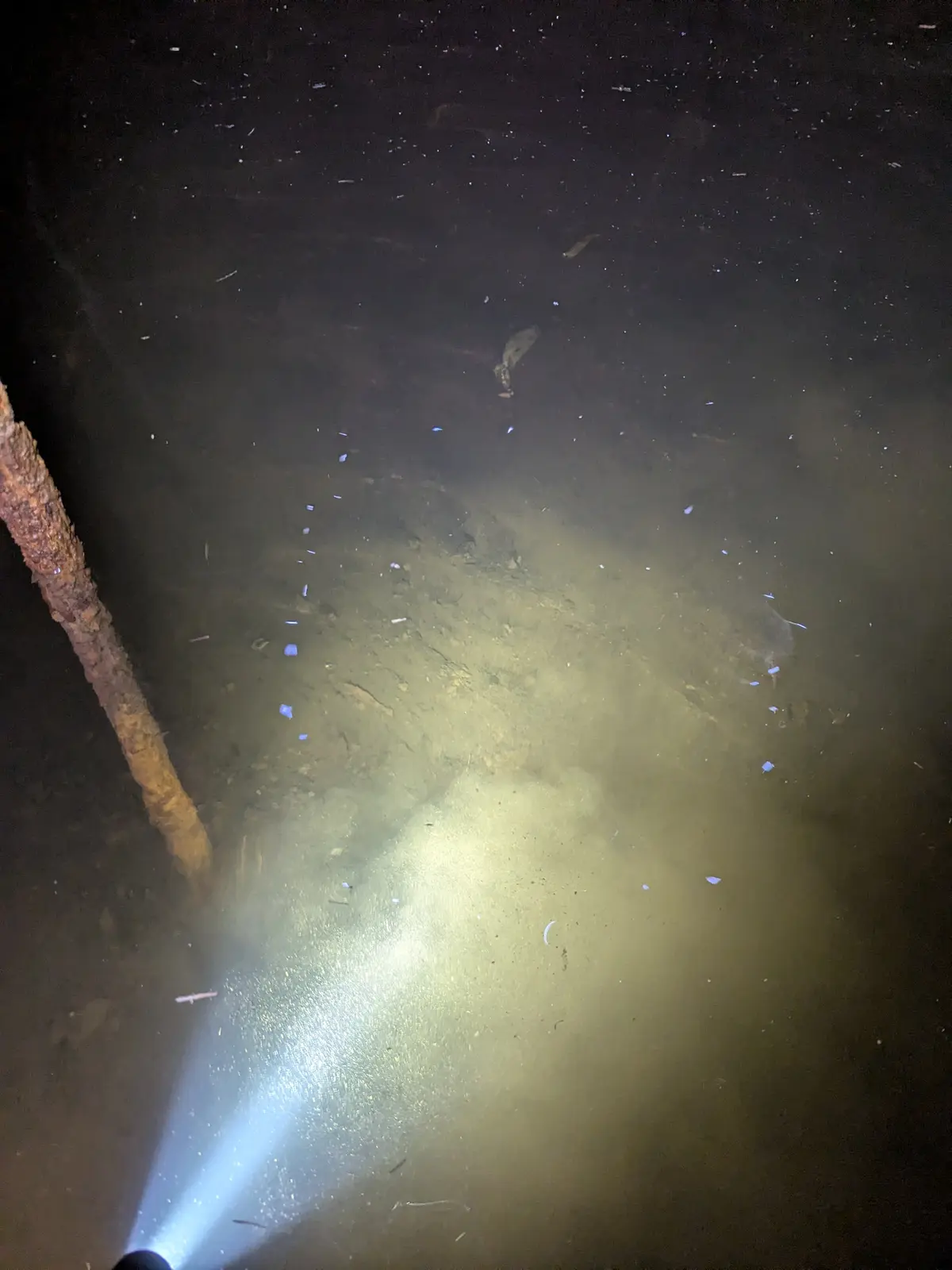
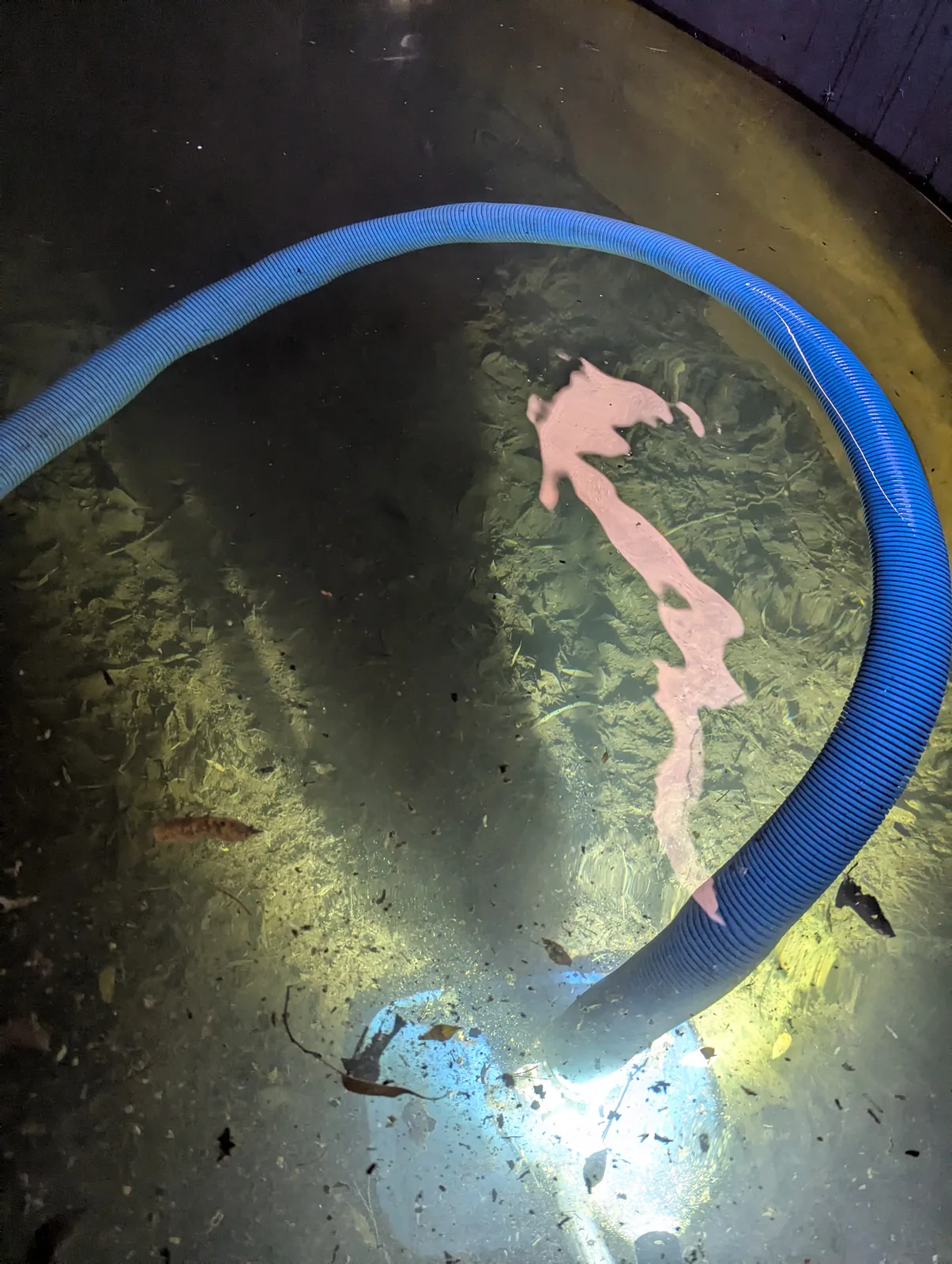
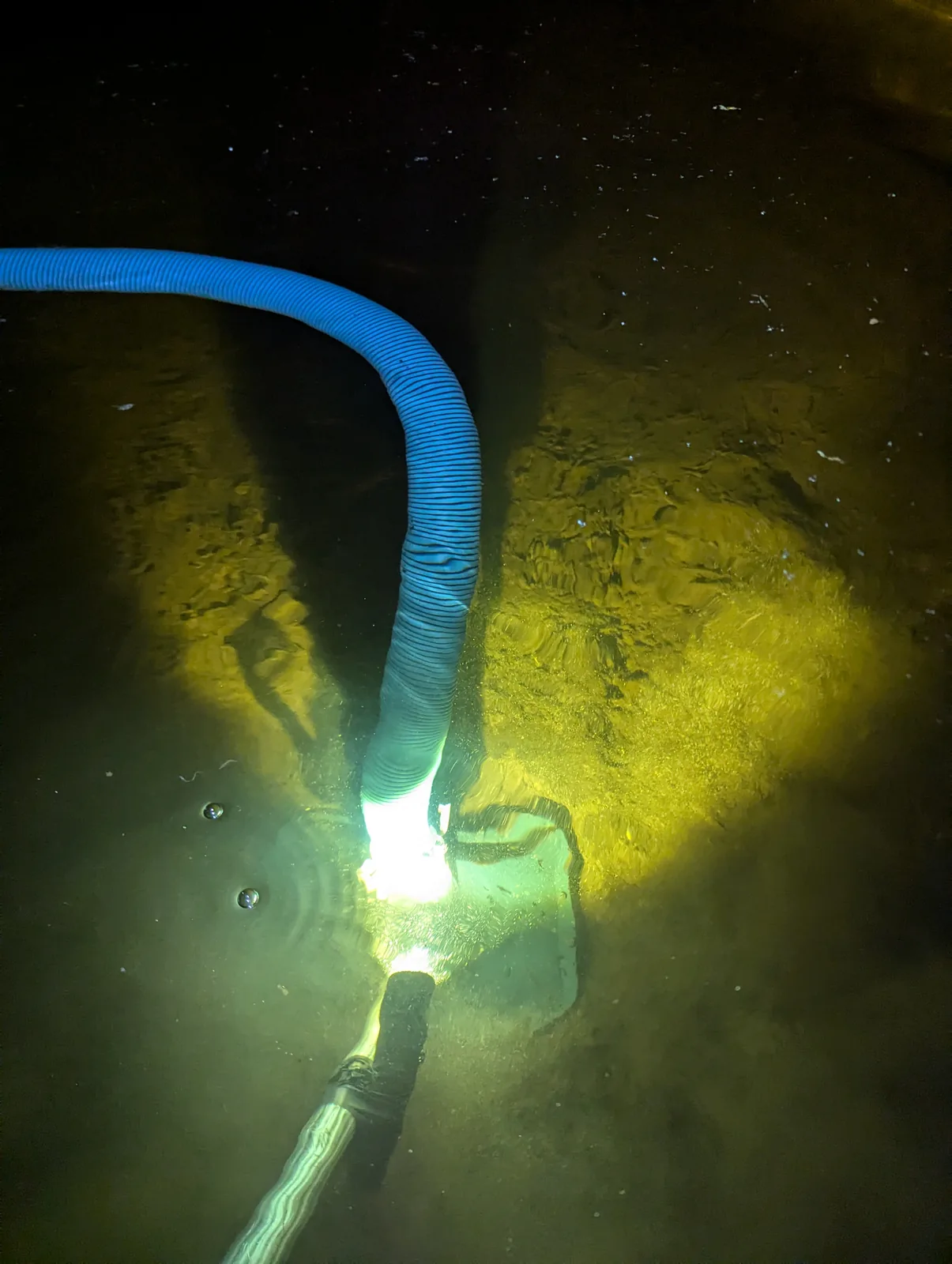
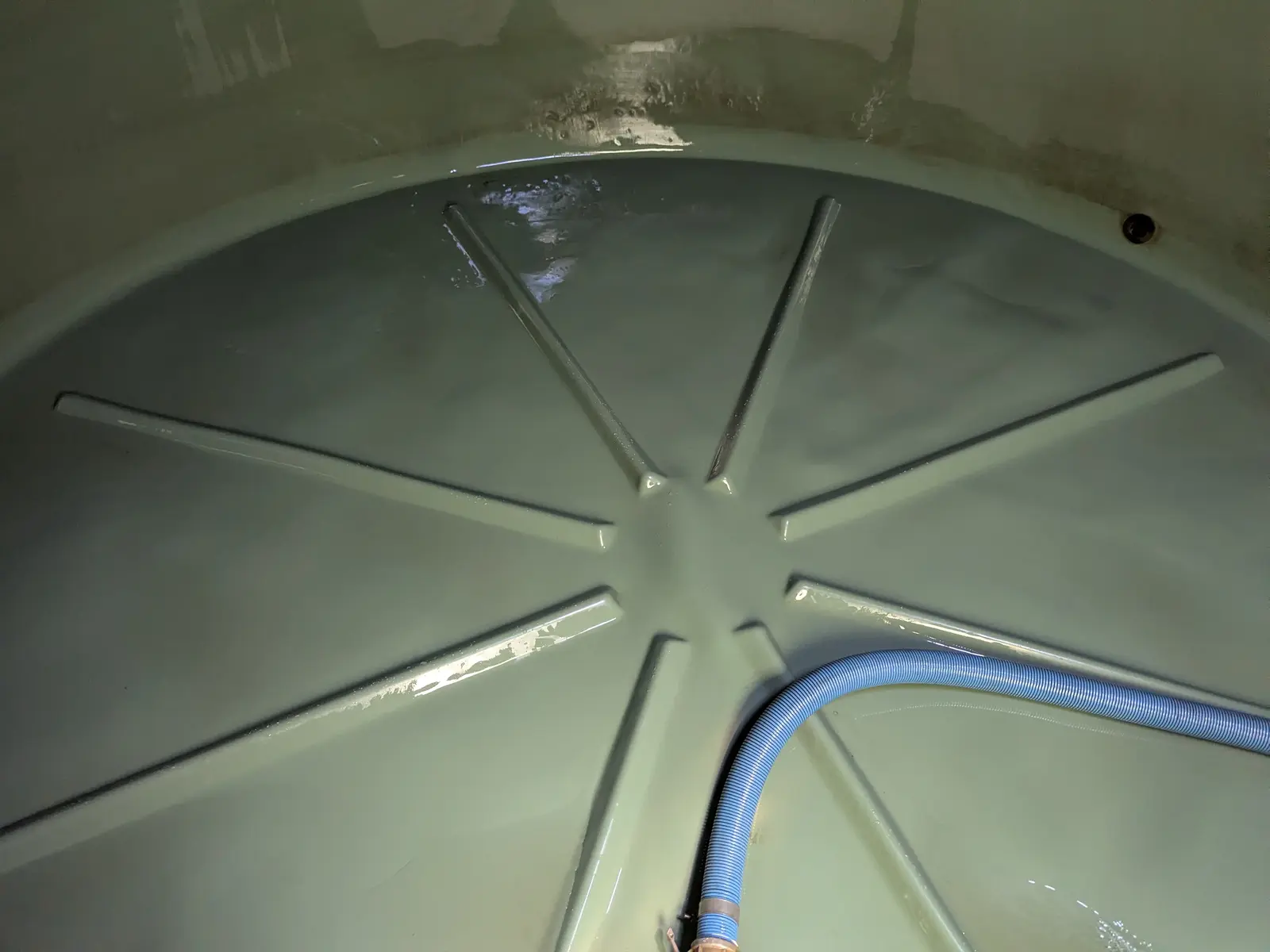
Years of sludge, sediment and organic matter vacuumed out of your tank in minutes — Tank will be like new and your drinking water will be fantastic. Prices from $350, with $50 off each extra tank, 1hr from Albury.
Fill out the contact form and I'll get back to you soon!
Fastest: call Marcus and discuss your water tank — most liner quotes start with a phone call and a few photos of your tank.
No obligation, no call-out fee for a quote.
Prefer email? Please include the tank capacity (litres or dimensions - height x diameter) and town — you'll get a reply from concretewatertankrepairs@gmail.com.
Photos help a lot — text them to 0449 933 085 or email them to concretewatertankrepairs@gmail.com.
Best shots: the whole tank (helps me judge capacity), any visible damage, and the outlet so I can size the pipework.
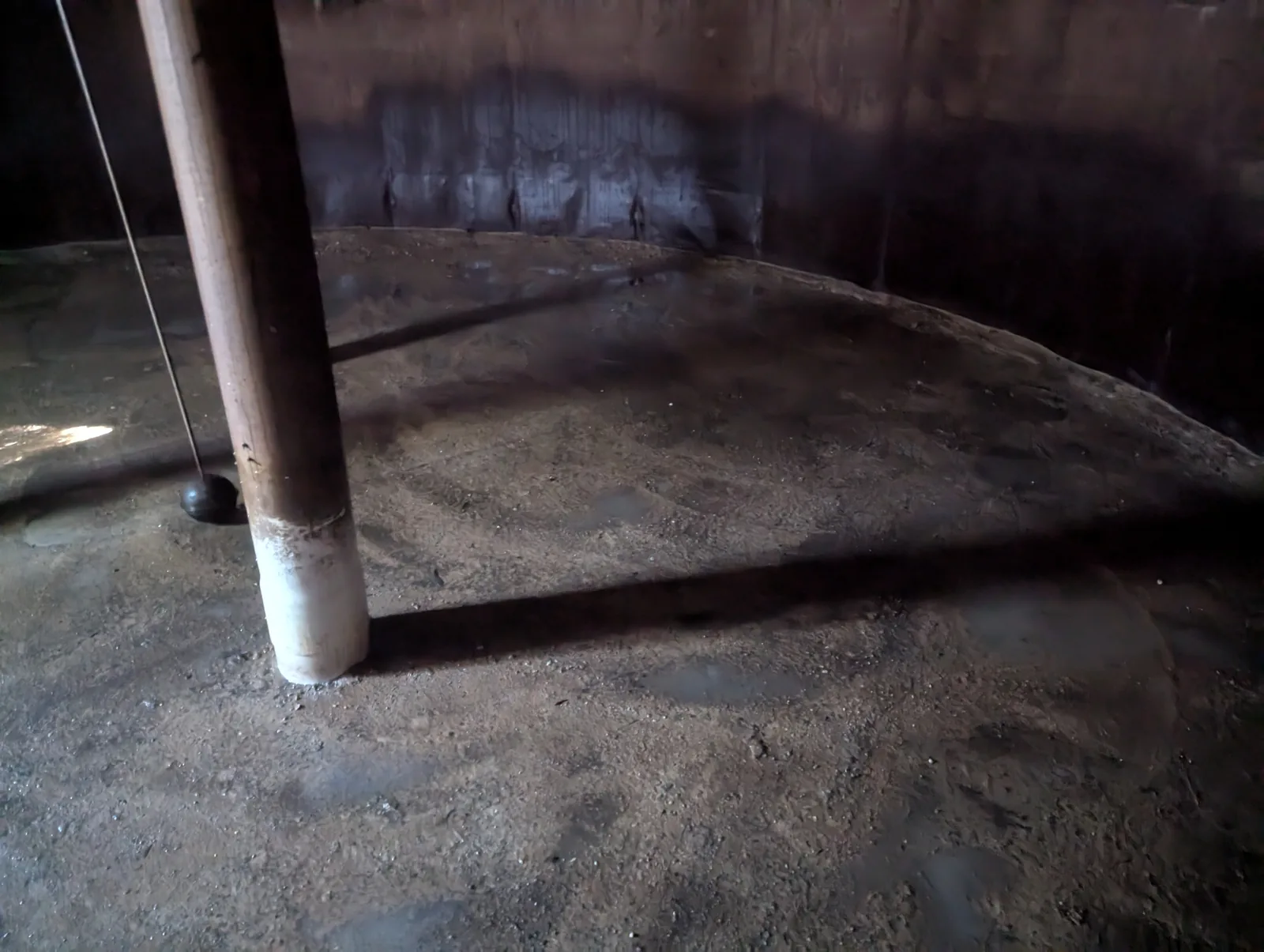
Commonly enters the tank from dust from nearby roads settling on your roof and being washed in or from a bore pump that draws it in. Sediment is fairly inert water quality-wise and a thin layer is normal, although it does mix with organic matter making a thick, more viable home for bacteria if left for too long.
However it does find its way into your house plumbing, gunking up tap aerators and putting a grittiness in your drinking water. Check inside your toilet cistern to gauge how much sediment dis entering your plumbing system.
Leaves, sticks and bird droppings washed off you roof and into the tank settles into a layer on the tank floor. That layer creates a home and feeds anaerobic bacteria, which in turn break it down, driving the discolouration, tastes and odours people notice.
And on an unsealed tank, extra visitors get in — spiders, frogs, insects and larvae that die, break down and add to the load.
Preventing light from entering the tank is also important - light and warmer temperature in summers combined with algae or moulds entering the tank can lead to blooms, that float around in the tank looking like jellyfish.
NSW drinking water guidelines suggest every 2–3 years — but it really depends on your setup: how your rainwater's harvested, how close your gutters are to trees, and whether you're near a dusty road.
I've seen high quality rainharvesting systems that only have a light layer of sediment after 10 years and customers calling me back the following year with a this years autumn leaves causing water taste issues again.
My suggestion is, if you have concerns regarding your water quality give Marcus an call to discuss a tank clean. Afterwards I can give you an assessment of what type of matter is mainly in your tank and options for improving your rainharvesting system going forward.
Drain & Clean — I typically recommend this option for anyone moving into a new property, if the main debris in the tank is organic matter or 'its been a long time'. Broken down organic matter is easily disturbed, regardless of how carefully the tank is cleaned. It becomes stirred up and suspended in the water ultimately ruining it taking days to settle. Drain & clean the tank, pay for a water carter if you haven't got a backup source and get back to a known good state for piece of mind going forward.
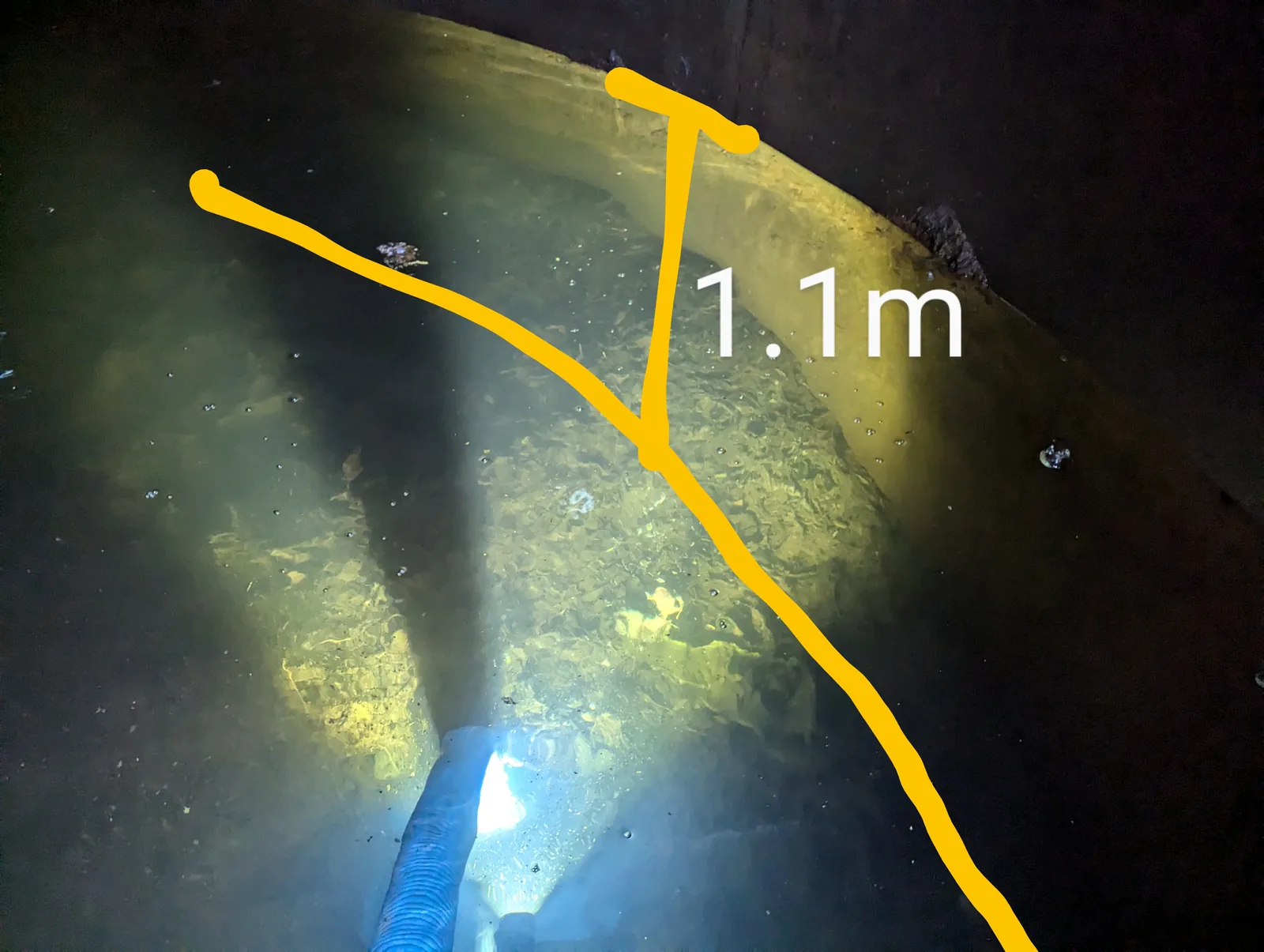
Basic Vacuum Clean — Typically reserved for well maintained tanks, on arrival I might made the decision that this is sufficient for your tank, where there is only a thin layer of debris. We'd still require the tank water level to be dropped to about 1.1 metres for access, but depending on tank capacity, we'd use ~150mm - 300mm of that water to run the vacuum over the bottom of the tank only lightly disturbing it leaving the rest behind. It might take a day or two to fully settle depending on how fine the particles are. In some cases we can use a long pole for the vacuum head while the tank is completely full, but this method is less accurate and will only remove 90% of the debris.

A typical clean, start to finish.
We will provide an accurate quote over the phone based on your situation. We have standardised pricing for various tank capacities and will discuss tank cleaning options, providing you with a clear explanation as to why one option might be the most suitable. We will book a time and date for the job.
Arrive at the job on time and send an ETA when on route to your property. We will confirm the job with you on arrival and proceed to clean the tank. The sludge will be pumped out into the paddock or somewhere suitable. we will take photos as well to show you the results.
While we're in there we check the tank's condition — cracks, inlets, roof and the type of debris that's in there — and tell you straight what we find. We can provide recommendations and option on improving your rainharvesting system.
Depending on the service undertaken, that tank will be immediately ready to refill with bore water or a water carter can be booked to arrive later that day. We can arrange a water carter within 1hr from Albury, otherwise call you local rural store in advance, they will know who to call.
Enjoy your clean drinking water!
Sludge being vacuumed off the floor of a tank and pumped out to the paddock.
From $350
From $350 for a 22,500 poly tank within an hour of Albury (travel quoted for time exceeding 1hr). Got more than one tank in the 22,500–32,000L range — or a neighbour in the same boat? Take $50 off each additional tank cleaned in the one callout.
For more pricing give us a call to discuss the situation.
No — we use the water in your tank to vacuum-clean it, and we typically need a minimum of about 300mm of water to effectively clean a tank, a really bad tank can require more, especially smaller capacity tanks. Cleaning out an emptied tank with buckets doesn't get the same result, takes considerably longer and is far from enjoyable, leaving sediment and anaerobic bacteria behind. For larger tanks that only need a basic clean, we can drop the level to 1.1m, or wait until it's around there, then enter and carefully vacuum the bottom of the tank while keeping some water behind. Depending on the sediment it can stay cloudy for a day or two while it settles. If it's an organic-matter build-up, though, we do suggest a Drain & Clean and arranging a water carter or refilling from bore water - guaranteed great result.
From $350 within an hour of Albury, with travel quoted upfront beyond that. Final price depends on tank size, condition and access — confirmed before we start. Discounts for multiple tanks in one visit. See if your neighbour has thought about their tank recently.
NSW guidelines suggest every 2–3 years — but ultimately it comes down to your rainwater-harvesting setup and how close you are to trees etc. If you've just moved into a new property, we suggest a Drain & Clean to achieve a 'blank slate' while you get your water storage system sorted.
Concrete, poly and steel tanks, with or without liners, above or underground. we clean them all.
Yes — it helps a lot. Most taste and odour comes from organic matter and anaerobic bacteria; sediment from a dusty road usually imparts very little. If you've got taste, discolouration or odours, we strongly advise a drain and clean and getting fresh water delivered. We also suggest a product called Puretec Tanksafe — hydrogen peroxide based, and to our tastebuds the best-tasting disinfectant going. It breaks down like this: 2 H₂O₂ → 2 H₂O + O₂ (in plain English, it turns into water and oxygen), while a trace of silver keeps the tank protected for a couple of months. Safe to drink when dosed to the directions.
It depends. If there's organic matter, taste, odour or discolouration, we strongly advise a Drain & Clean to remove the existing bacteria rather than carry it forward. If it's just sediment build-up from a nearby dusty road — minor organic matter, no taste, odour or discolouration — then we can often drop the level to around 1.1m, carefully vacuum the tank, and leave enough water for daily use, then organise a water carter or wait for rain depending on the season and your setup. We understand you need water immediately but if you're calling us for a tank clean, organising clean water is the best part.
Within an hour of Albury, yes we can, hes great! Further out, we'd suggest ringing your local rural store — they'll know the best deal in your area better than us.
Most jobs are around one to two hours from arrival, depending on tank size, how much sediment has built up and access. Larger tanks or heavy sludge loads take longer.
Not necessarily, as long as I've got access to the tank and a water source. Plenty of jobs get done while people are at work — we sort the details when you book.
It's pumped out and disposed of appropriately. On farms it's often fine to discharge well away from the tank and any watercourse — we'll discuss what suits your property.
Usually yes. Filtering water from a sludged tank means cartridges load up faster and you're changing them more often than you should. Doing both in one visit also saves a second call-out.
Sometimes. Well-maintained tanks can often be vacuum cleaned with water left in them. If there's a heavy organic layer a drain and clean gives a much better result. I'll advise which suits your tank before the job.
If the answer is "never" or "no idea", it's due. Call Marcus for a straight answer on what it'll cost.
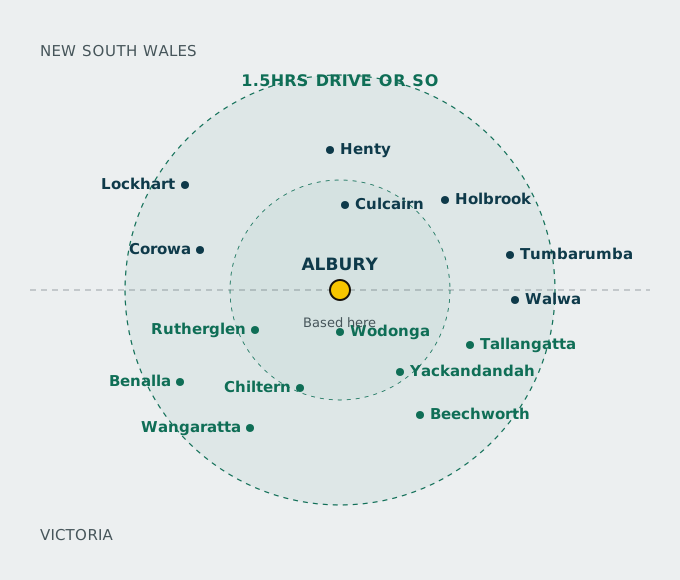
Call Marcus — 0449 933 085Based in Albury and covering roughly 1.5 hours in every direction — across Southern NSW and North East Victoria.