A concrete water tank liner is the best fix for a leaking tank — Significantly cheaper and easier than a new tank and a permanent solution.
Australian-made, custom-fitted to your tank, 1 day install, 10 year warranty, design for 20+ years.
Fill out the contact form and I'll get back to you soon!
Fastest: call Marcus and discuss your water tank — most liner quotes start with a phone call and a few photos of your tank.
No obligation, no call-out fee for a quote.
Prefer email? Please include the tank capacity (litres or dimensions - height x diameter) and town — you'll get a reply from concretewatertankrepairs@gmail.com.
Photos help a lot — text them to 0449 933 085 or email them to concretewatertankrepairs@gmail.com.
Best shots: the whole tank (helps me judge capacity), any visible damage, and the outlet so I can size the pipework.
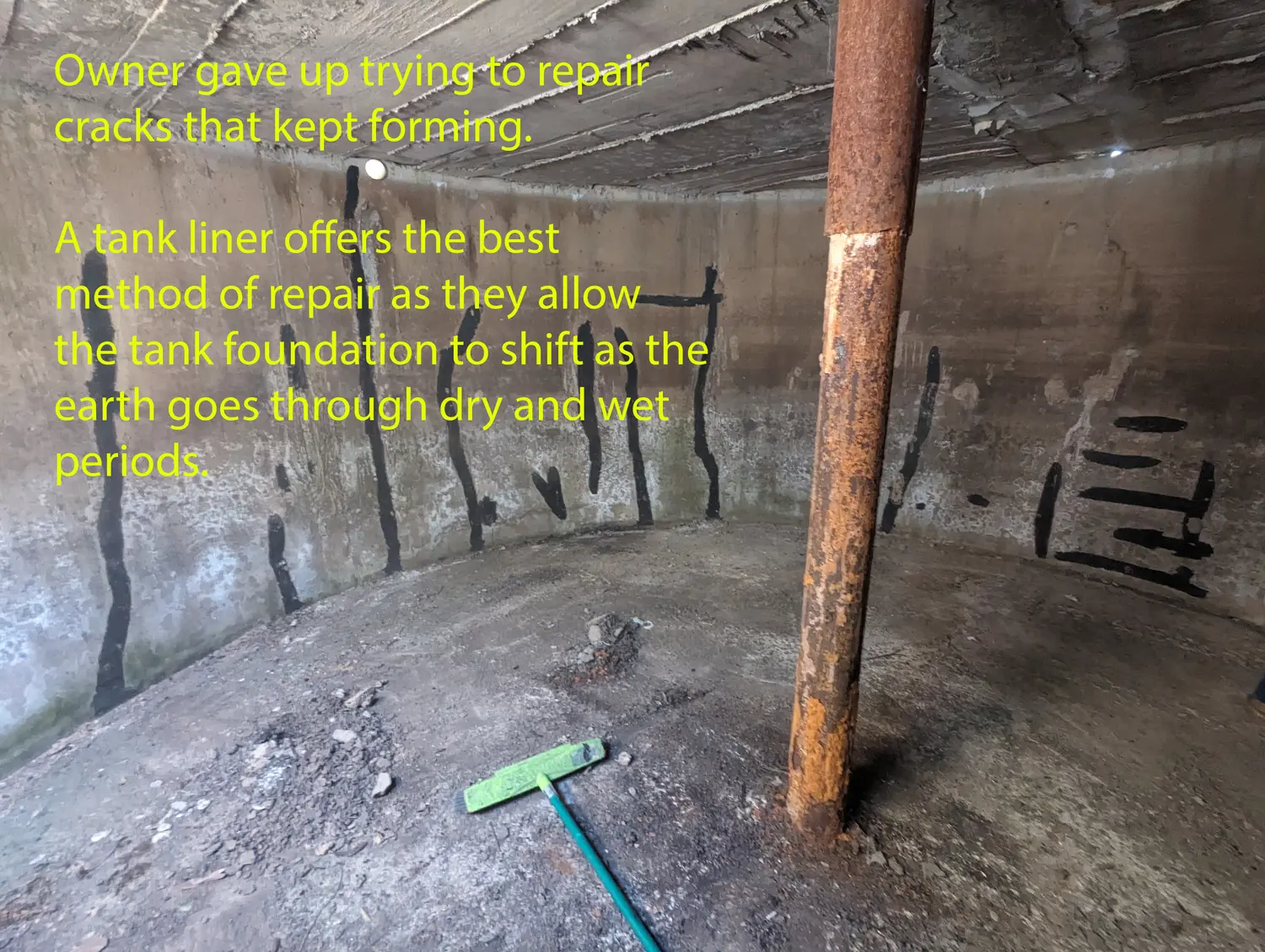
Concrete water tanks crack — in the base, where the walls meet the base, and the walls themselves.
It's not a defect; it's the clay and soil underneath going through wet and dry cycles, working the tank a little with every season. The movement is minor, but concrete is inelastic — it can't flex with it, so it cracks.
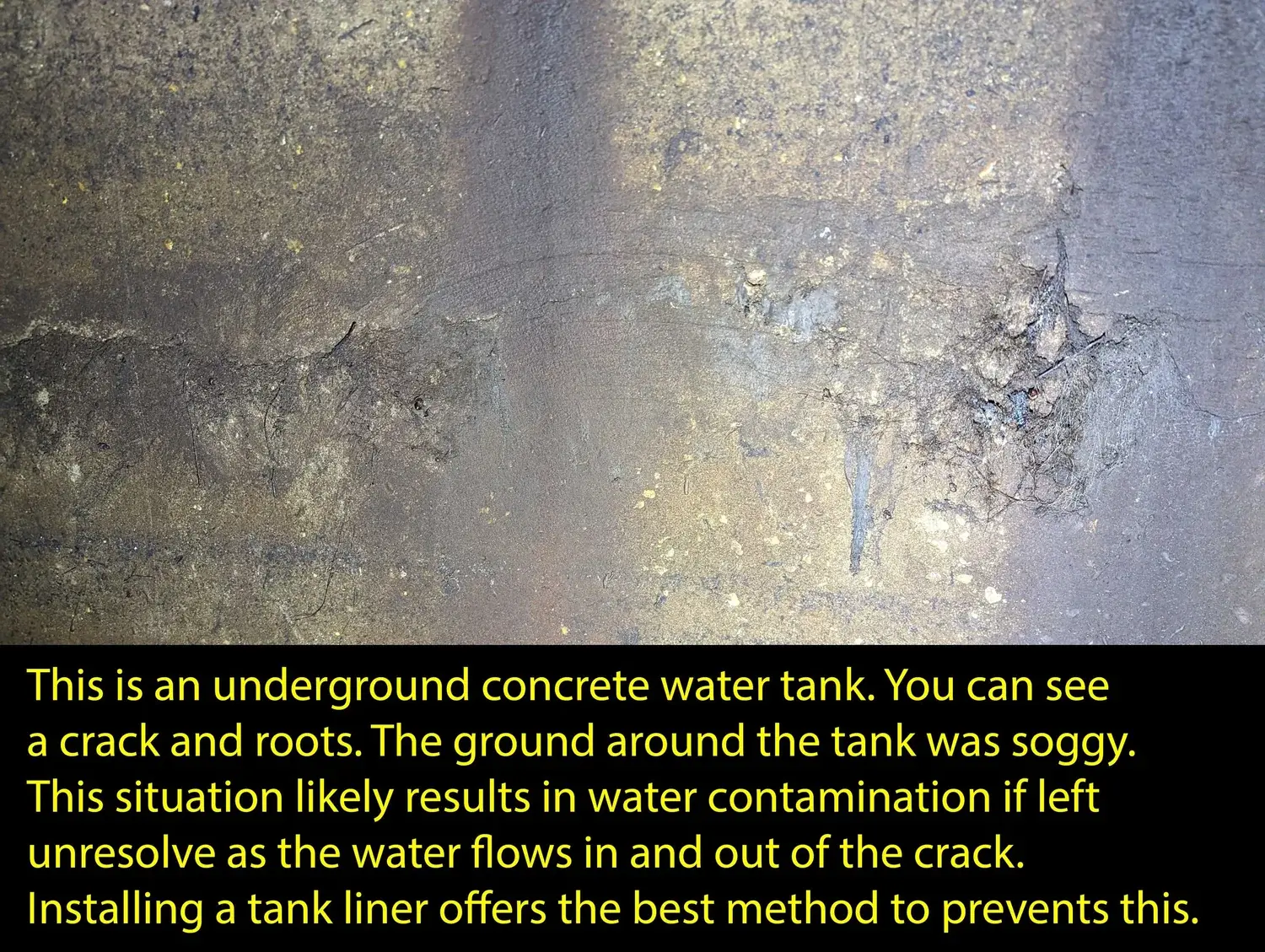
Underground tanks hide even more. Because they're buried, a crack doesn't just leak out — water moves back and forth between the tank and the surrounding soil, so groundwater, roots and whatever's in the ground can work their way into the water you're drinking. Out of sight, but not out of mind.
Here's the key thing: structurally, your tank has likely got decades left in it. What it can no longer do is be both the structure and the waterproofing at the same time.
A liner separates those two jobs — A liner separates those two jobs — the concrete keeps doing the structural work, and the liner takes over the waterproofing.
That's also why a liner beats rendering or sealants: renders and coatings delaminate and crack again because they're bonded to a surface that keeps moving.
A liner isn't bonded — it allows for the movement.
Liners are food-safe and meets AS/NZS 4020 for the storage of drinking water, and it's no experiment: liners have been used in water storage tanks for over 40 years and are the industry standard for tank repair. That's why I can comfortably back mine with a 10-year warranty.
From first phone call to a full tank — the whole process, no surprises.
Marcus can callout & measure the tank, quote via email detailing your situation.
OR
You can send measurements and photos yourself: estimated capacity, height x diameter, plus a few photos.
Free detailed quote, no obligation either way.
Your liner is made to measure in Australia to the AS/NZS 4020 drinking water standard — allow 3–4 weeks.
CNC cut, triple checked, high frequency welded seams, best in class quality.
Once it's shipped, I'll call to arrange an installation date.
Tank is vacuum cleaned, surfaces prepared, backing fabric installed for abrasion resistance, support post modifications, fit the liner, plumb it up — inlet, outlet, overflow — in a single day.
Ready for water that evening. We can help arrange a water carter.
Backed by a 10-year warranty on both the liner and the workmanship — with a working life of 20+ years, no problem.
Our installation method has a proven track record for over 12 years and counting.
Tank Fixed.
The three ways to deal with a leaking concrete tank, honestly compared. We do all three — this is how we help you pick.
| Option | The honest verdict | Longevity | Cost |
|---|---|---|---|
| Crack repair | We'd avoid it. Patching can fail after just a couple of wet/dry foundation cycles — regardless of workmanship — or it delaminates from the moving surface. Many products aren't food-safe either. | Most products fail within a couple of years | A little bit cheaper upfront — then paid for again |
| Tank liner | We use the highest-quality liners on the market — food-safe (AS/NZS 4020), moves with the tank, backing fabric protecting it from abrasion. Compatible with internal support posts. The same material the big brands use in new Colorbond tanks. Minimum hassle and a guaranteed fix. | 10-year warranty, 20–30+ year life expected | A fraction of the cost of a new tank, only a 4 week lead time, a phone call and a couple of photos |
| New tank | Can be the right call for a smaller tanks or one that's severely damaged — but for most concrete tanks it's just the expensive, difficult option, especially as the tank you've already got can likely be repaired. Hidden costs, budget for site prep, redoing the plumbing and disposal of the old tank. | Decades | 2–6× cost of a liner, with a 6–12 week lead time, maximum effort |
Not sure which camp your tank is in? Send Marcus a few photos — you'll get a straight answer, even if that answer is "just patch it."
Every liner is Australian-made and certified to AS/NZS 4020 — the Australian standard for 'The Storage of Drinking Water'.
No taste, no chemicals, no worries — the same material the big brands use in their new Colorbond tanks.
And they last: we've been called out to replace liners that were installed in the 1970s that are only now reaching the end of their run. Liners work in concrete and metal tanks — above ground or below - compatible with tank that have internal support posts — roof remains on during installation.
Our installation method has a track record of 12 years and counting. We trust it.
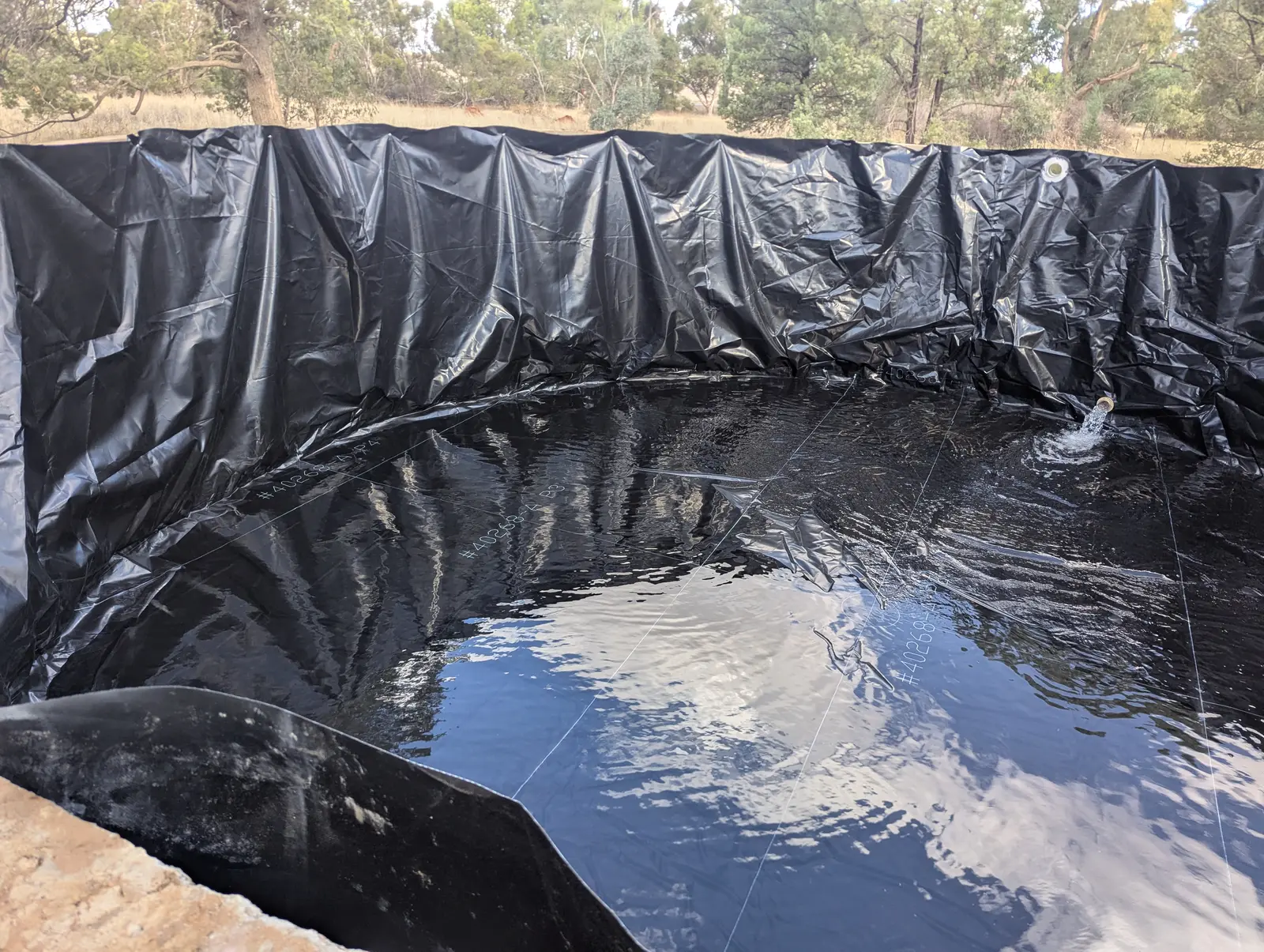
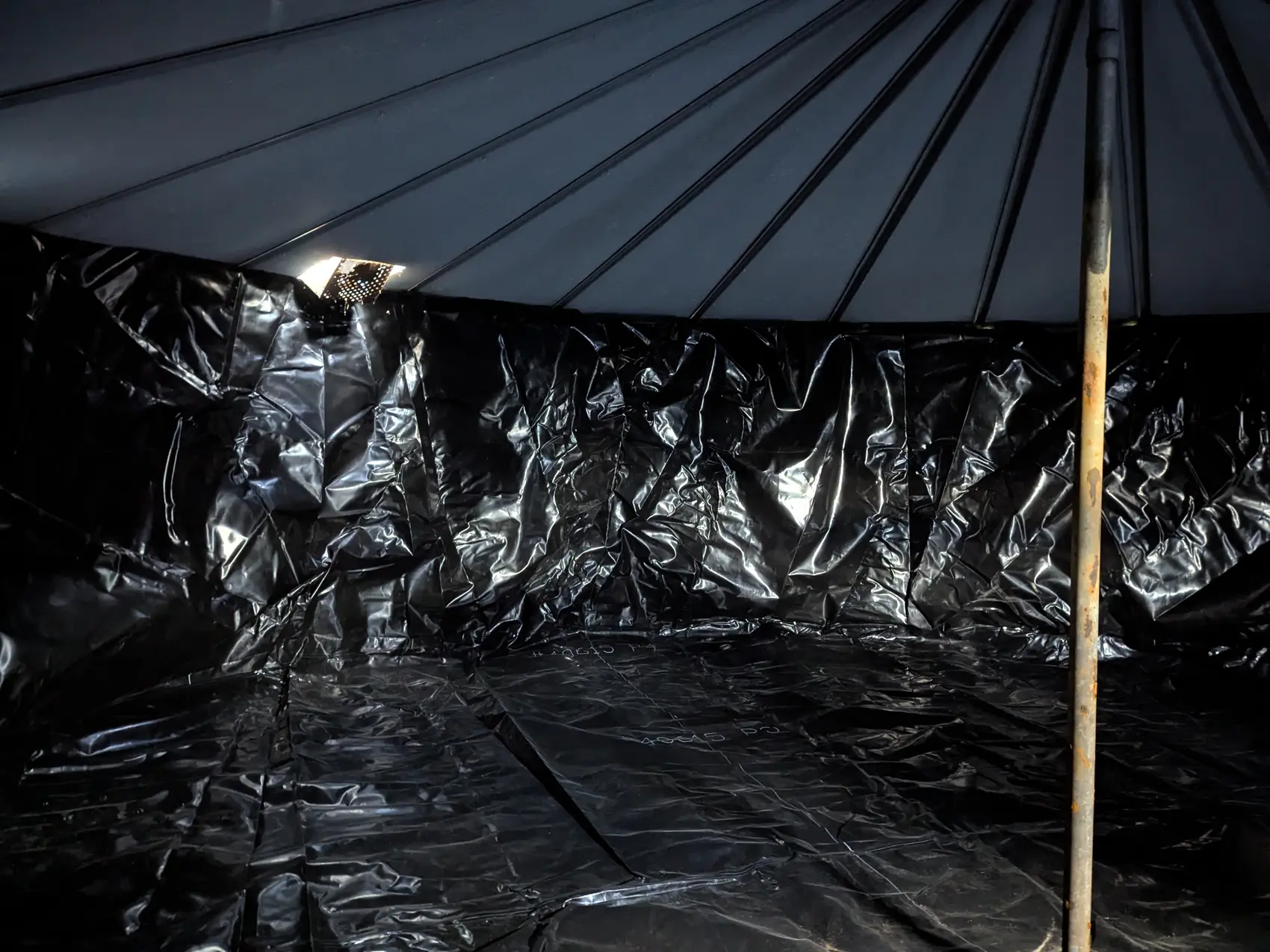
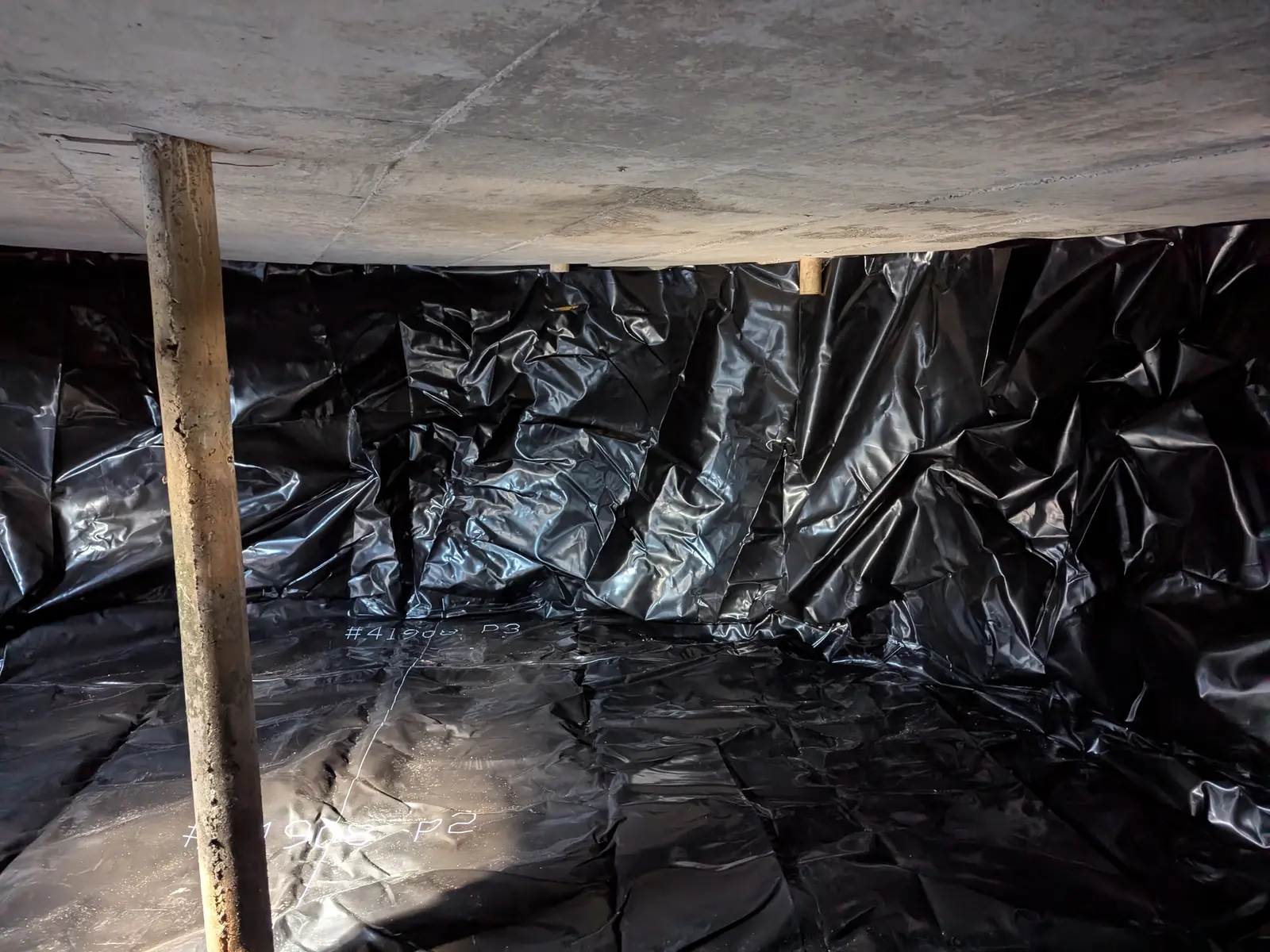
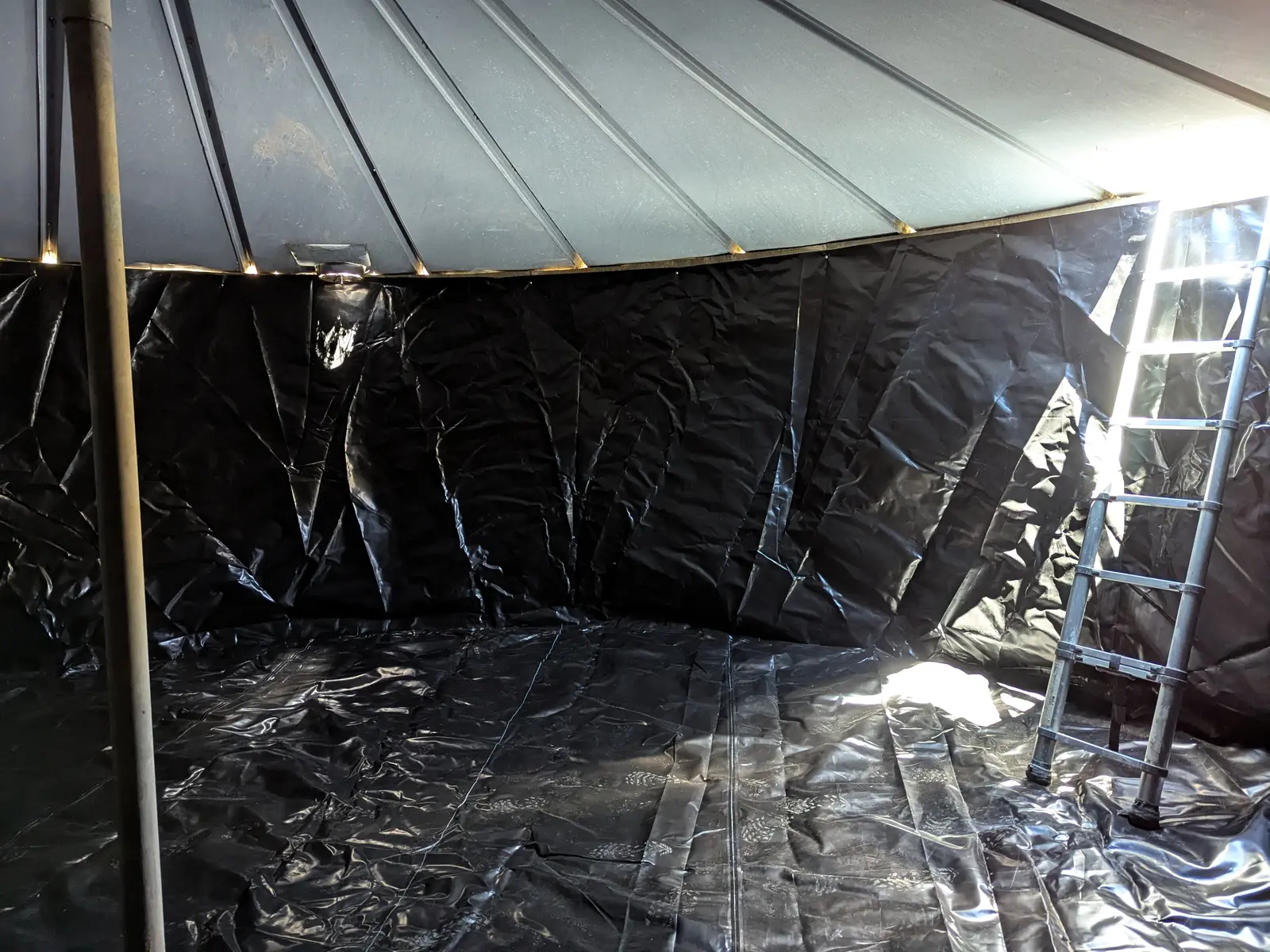
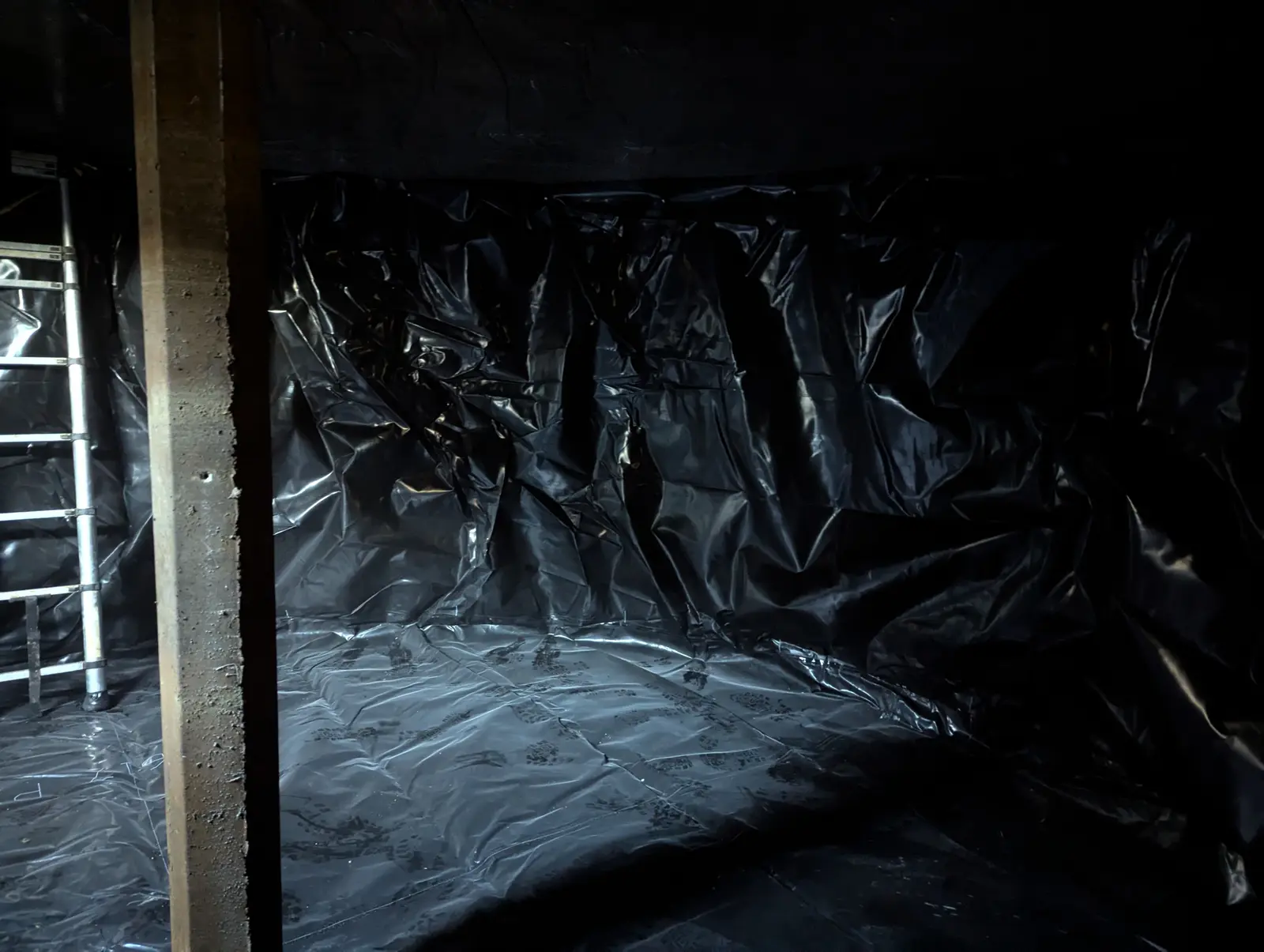
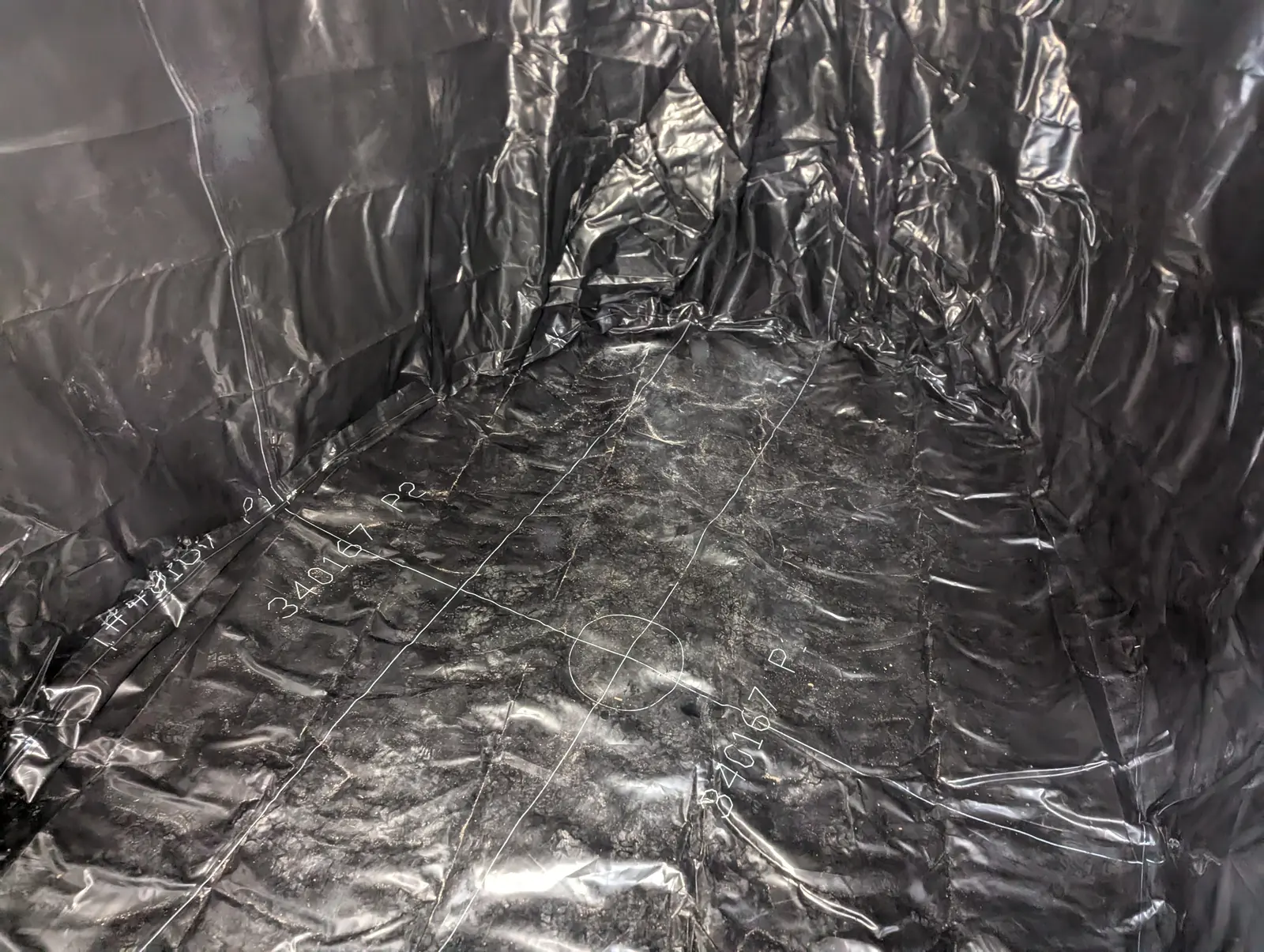
What a finished job looks like: the liner runs wall-to-wall and floor-to-ceiling in one continuous membrane, every pipe penetration sealed, roof support posts accommodated, and each liner carries its factory job number — custom-made for that tank and no other. Whether it's an open farm tank, a roofed tank, or one tucked under the house, the result is the same: a tank that holds every drop again.
Every tank is different — size, condition and access all matter — so every liner is priced individually after a consult. A few photos and rough dimensions are usually enough for a firm quote, and it's a fraction of the cost of a new tank the same size.
Call Marcus — 0449 933 085This is the assumption that stops people picking up the phone: that lining a tank means taking the roof off, or worse, that the tank has to come out.
It doesn't. The liner goes in through the existing access hatch. No crane, no removing the roof, no rebuilding it afterwards. Concrete roof, corrugated iron, timber — it stays put and the job happens underneath it.
If your tank has no roof, that's fine too — but if it has one, that's one less thing to worry about and one less cost in the quote.
Every tank is quoted individually — size, condition, outlet size and access all matter. Call and let us know your location, tank capacity and a couple of photos, or we can come to you, and Marcus will discuss the job with you and give you a obligation free quote and an honest price. Most rural tanks we line are between 22,500L and 100,000L, either concrete roof or metal roof is no issue.
The 10-year warranty covers both the liner and our workmanship, and the working life is 20+ years — likely 30 or more without damage. We regularly replace liners from the 1970s and '80s that are only now wearing out.
Yes — Australian-made and certified to AS/NZS 4020, the standard for products in contact with drinking water. It imparts no taste or chemicals.
The liner is custom-made for your tank, which takes 3–4 weeks. Installation itself is done in a single day, and you can refill immediately — we can organise a water carter if you don't want to wait for rain or haven't got access to bore water etc.
Usually not. As long as the tank is structurally standing, a liner doesn't care how cracked the concrete is — that's the whole point. If a tank genuinely is beyond lining, Marcus will tell you straight and talk through replacement options. We do not want to warranty a tank that is beyond repair, but it's very rare that a tank can't be fixed due to the reinforcement in the concrete.
Yes — liners suit concrete, metal and corrugated tanks, above ground or underground, with or without internal support posts, we can manage it.
No. Most liners go into tanks with the roof left in place — the liner goes in through the existing access hatch. No crane, no removing the roof, no rebuilding it afterwards. It's the most common assumption people get wrong about liners, and it puts them off calling.
Yes. Underground and partially buried tanks are lined regularly. Access is the main variable — I'll want to know the hatch size and how the tank sits in the ground before quoting.
They're sealed through the liner with proper flanged fittings, so your existing pipework keeps working. Outlet size and position are things I check when quoting, because they affect the liner spec.
Negligible. The liner sits against the wall and floor — you're losing the thickness of the material, not any usable volume.
It needs to be empty and clean for the liner to go in. If there's sludge on the floor I'll vacuum it out first — that's usually done as part of the same job rather than a separate visit.
Tell Marcus about your tank — size, age, what it's doing. You'll get straight advice on whether a liner, a repair, or something else entirely is the right fix.
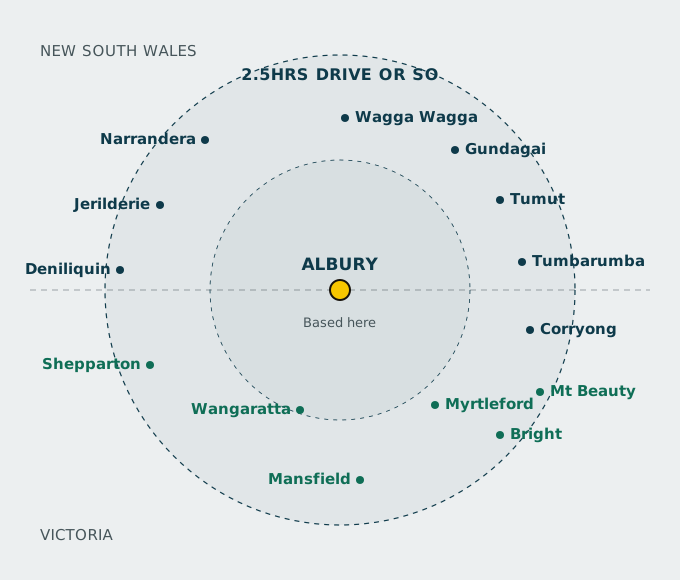
Call Marcus — 0449 933 085Based in Albury, travelling roughly 2.5 hours in any direction across Southern NSW and North East Victoria. If your tank's in this circle, we'll get to it.